Today, my father turns 58.
Quiet, hardworking, patient, and one of the smartest people I know, he tends to go underappreciated but he has always been the backbone of our family.
So thank you, Daddy. Happy birthday 🙂
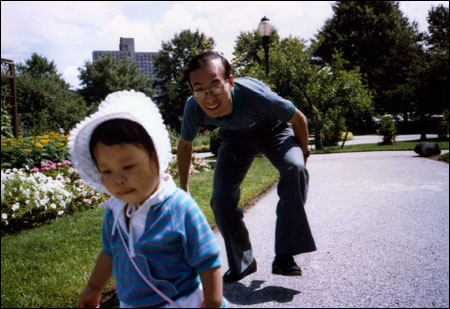
Today, my father turns 58.
Quiet, hardworking, patient, and one of the smartest people I know, he tends to go underappreciated but he has always been the backbone of our family.
So thank you, Daddy. Happy birthday 🙂
Ever since I can remember, ladies’ figure skating has been my favorite event to watch in the Winter Olympics. I remember being glued to the television when Kristi Yamaguchi and Midori Ito won medals at the 1992 Albertville Olympics in France, and just being so enamored with those women and the magic they worked on the ice. Kristi Yamaguchi became my childhood idol, and I still get excited whenever I see her come on television. (I secretly hope that I will someday run into her, since she lives in the Bay Area.) Since then, I’ve watched the likes of Tara Lipinski, Michelle Kwan, Sasha Cohen and Shizuka Arakawa skate towards their medal dreams at the Winter Games.
This past Tuesday and Thursday were the short program and free skate for the ladies’ figure skating this Olympics, and they were the most exhilarating programs that I’ve seen in years! The ladies who competed this year were among some of the best figure skaters I have ever seen, and each one sparkled in their own way on the ice.
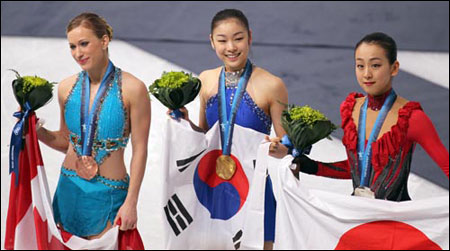
Kim Yu-na delivered a beautiful, groundbreaking performance to answer the world’s expectations of her to come out on top, setting world records in scores for both the short program and free skate, and winning South Korea’s first ever figure skating medal. Japan’s Mao Asada made history as well, surpassing her idol Midori Ito to become the first woman to ever successfully land two triple axels in routine, three total triple axels in a competition. And Canadian figure skater Joannie Rochette brought the world to tears as she skated with such beauty and strength, only days after losing her mother to a heart attack. I’m a huge fan of all three of these ladies, and just watching them perform was such an emotional rollercoaster for me and each of them brought tears to my eyes.
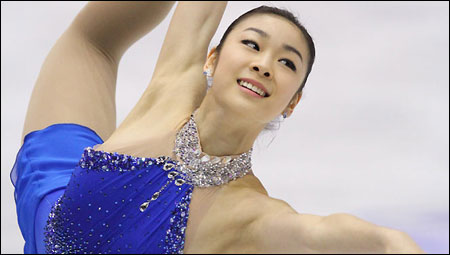
Kim Yu-na, of course, was the heavy favorite for the gold, and was shouldering such immense pressure not only from her own country but from the world. As the current reigning World Champion, everyone kept saying that the gold medal was hers to lose. I can’t even imagine how difficult it must be to face pressure of such humongous proportions at only 19 years old. But in this competition, she didn’t falter even once in her programs, and she skated flawlessly to the gold. Her skating is so breezy and light, with such fast jumps that she almost makes it look easy. Akiko Wada even commented on a Japanese television show, “When you watch Kim Yu-na skate, you can watch her at ease because she is just that smooth… you don’t expect her to make any mistakes.” Her performances were truly legendary this time, and her scores reflected it. Although I have always been a fan of Yu-na’s skating skills, one thing that always bothered me a little was that she is so hard to read — she always seemed so calm and collected, which is a mark of a professional, but the emotions of these athletes are what usually really draws me in. Upon completing her long program, though, with the realization that she’d pretty much nailed the gold, Yu-na showed a much more human side than I’d ever seen before, shedding tears that turned into sobs as she skated across the rink. It was the first time I’d seen her show so much emotion, and it really moved me and immediately lodged a huge lump in my throat. How much relief and joy she must have felt in that moment, to finally have that pressure lifted from her shoulders and be rewarded for the years of effort and training to make history for her country.
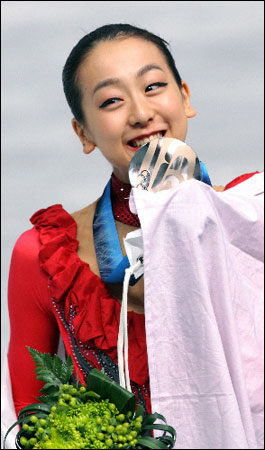
Japan had three skaters in the competition this time, but the obvious favorite of the nation was young Mao Asada, also 19 years old. She’s been the sweetheart of Japan’s figure skating for years now. Doe-eyed and possessing an adorable smile and cheery personality that can light up an entire room, she is balanced, humble, and scandal-free — everything Japan could want of a star athlete. In 2006, she  was just short of the cut-off age for the Torino Olympics, but was already considered one of the greatest skaters in the world, having landed her first triple axel at age twelve and winning everything on the Junior level. She went on to become the 2008 World Champion, and although she has been a little shaky this past season, she had just won the 2010 Four Continents Figure Skating Championships in January. There have been only five women in figure skating history who have been able to successfully complete a triple axel in international competition, three of them Japanese, and Mao is one of them. I admit that I have a soft spot for Mao, since I have been watching her skating since she was a teen, and I have anticipated her doing well at the Olympics since four years ago. She too was under a lot of pressure from being Japan’s favorite in figure skating, although probably not as much as what Yu-na was facing. I personally thought she skated most elegantly in the short program and she was able to nail her triple axel, but Yu-na got more speed and height in her jumps comparatively. I noticed that Mao’s routines have gotten a lot darker and more heavy-drama since she began training under her Russian coach Tatiana Tarasova — gone are the days when she used to skate to lighter melodies like Chopin and Claire de Lune (I kind of miss those days!). For her free skate, she skated to Bells of Moscow, and the routine was so intense, it felt like she was going to set the ice on fire. She had to go on right after Yu-na delivered her golden performance, and although she says in interviews that she hadn’t heard the scores due to the loud cheering, it still must have been unnerving to perform in the wake of all the cheers being showered upon her biggest rival. So I was that much more impressed when she was able to solidly land her triple axels early in her program — the courage and power with which she executed them made tears spring to my eyes (especially since I’d already had that lump in my throat thanks to Yu-na’s tears). But in the middle of the program, she faltered and missed the takeoff on a jump and what was supposed to a triple ended up being only a single — the mistake was costly, and put her significantly behind Yu-na in her score, putting her in second place to win the silver medal.
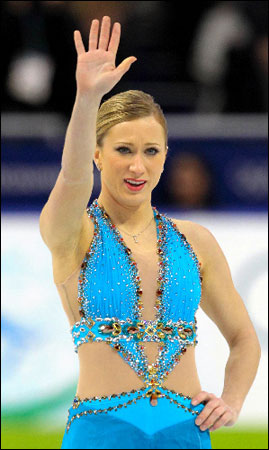
Joannie Rochette of Canada performed extraordinarily well considering the circumstances of her mother’s unexpected death due to a heart attack only a couple days before the short program. Her mother had been her best friend and biggest support, and despite the deep sorrow she must have felt at such a huge loss, Joannie still went onto perform because she knew that that was what her mother would have wanted her to do. The fortitude and bravery with which Joannie went forth with her performance was incredible and brought the whole stadium to their feet to applaud her. Both nights, her skating was amazingly clean for one who must have been suffering so much internally, and both nights, her performances were the ones that really brought on the waterworks for me. (There probably wasn’t a a dry eye in Pacific Coliseum, either.) Â She is truly a trooper, and brought so much inspiration to everyone watched her.
I was also pleasantly surprised by how strong Mirai Nagasu of the U.S. team performed. On Thursday, she was the last to perform after so many groundbreaking performances, and she still did it with such grace and gusto. She didn’t win a medal this year, but there’s no doubt that she has talent. I didn’t know too much about Mirai before this Olympics, but she definitely left an impression and I’m sure I’m not alone when I say that I’m looking forward to seeing her return to the Olympic stage in 2014. She may just be the next Kristi Yamaguchi. (I love seeing Japanese Americans represent!)
The medal ceremony was loaded with emotion as well. Yu-na tearfully accepted the first gold in the sport for her country with a shy smile — what a great moment for South Korea, and for Yu-na, to top her own world records and to achieve that validation. Joannie also had tears in her eyes as she made  her way to the podium in her home country, and I’m sure her mother was smiling down on her with so much pride. It was difficult to watch Mao at the ceremony, because you could tell she was really holding back her tears. I was hoping that she’d have her usual 100 watt smile on her face as she accepted her silver, but she looked stoic, trying hard to smile while choking back tears of disappointment. Like all figure skaters, she’s always dreamed of winning the gold, and that is what she had really wanted to do as she came to Vancouver this year. But more than that, she was frustrated that she had been unable to skate a program free of mistakes. Yu-na’s performance was just unbeatable, and it’s pretty questionable that Mao would have been able to top her score even if she had not made those two mistakes on Thursday. The emotions really surfaced and the tears just spilled over as she was interviewed by the Japanese media immediately following the ceremony:
Mao is very hard on herself here, repeatedly commenting on her feelings of regret. She says that the long program felt long and at the same time was over before she knew it. She says that she was very unsatisfied with her performance and that she is very disappointed in herself with the mistakes she made. When asked about her triple axels, she just answers that she is glad that she was able to complete them successfully, but that they were the only good thing about her program. This clip was shown live in Japan, and I’m sure I’m not alone when I say that I cried with Mao at her heartbreak and disappointment. Mao is a perfectionist and she had been dreaming of an Olympic gold since seeing Lipinski win back in 1998’s Nagano Olympics. How frustrating it must have felt to not be able to skate a clean program that she could be satisfied with after four years of training for the Olympics. I just wished I could tell her that she still skated great, and although it wasn’t enough to earn her the gold, that silver is still a huge honor that she should be proud of.
The poor girl had to do live broadcast interviews to Japan until 4am despite her exhaustion and fatigue, but Mao’s emotions seem to stabilize as the night goes on and she seems to be more collected and in higher spirits as Tokyo’s anchorwoman Ando interviews her. Ando really spoke for all of Japan when she told Mao that she and everyone back in Japan was immensely proud of her winning the silver for her country and that her performance brought them to tears.
Mao’s older sister Mai is also a figure skater and although she has not enjoyed nearly as much success as Mao and has since gone professional, she had been the inspiration for Mao to switch from ballet to skating at age 5. Mai surprised Mao as she came on during an interview, and Mao can’t help but shed tears as she’s reunited with her sister for the first time in Vancouver.
Mai expresses how proud she is of her baby sister, and reads a letter from their mother which again moves Mao to tears. Her mother writes that reflecting back on the years when Mao first started skating when Mao would frequently cry when she didn’t do well in competitions as a little girl, she feels that it is really an amazing miracle that Mao was able to place second on a huge world stage such as the Olympics. She expresses that she is full of gratitude for everyone who has supported Mao along this journey, and congratulates her daughter for doing so well. Mao had said that the first person she wanted to show her medal to and express her joy to was her mother, so she must have been so happy to hear from her back in Japan.
In a press conference on Friday, the day after the competition, Mao looked much happier after a night’s rest, as she spoke to the media with Miki Ando and Akiko Suzuki who also represented Japan this time. Mao stated that during the medal ceremony, she was still having difficulty sorting out her emotions and her disappointment and regret weighed heavily on her, but that now she is very honored and happy to have won the silver. She said that she couldn’t wait to return to Japan to show her medal to everyone, and to have people touch it. Asked about Kim Yu-na, she said that she thinks she is a great skater that she really respects, who inspires and motivates her.
Japan’s Prime Minister Yukio Hatoyama even issued a statement, saying “Given that Kim Yu-na’s performance was extraordinarily strong and outstanding, I would like to congratulate Asada Mao on her silver medal. The whole country is celebrating your achievement, and I would like to sincerely congratulate you.” At the same time, regarding the overall ladies’ figure skating this year, he commented, “I would like to offer congratulations on South Korea’s inspiring, historical achievement. It is really wonderful that both South Korea and Japan were able to bring so much excitement to the Olympic event this year. It is important to be able to compete like this on the world stage.” I had noticed that NBC and other media outlets had repeatedly mentioned the historical animosity between Korea and Japan, saying that “any defeat of Japan would be memorable for the Koreans,” and I am sure it probably is for many, given the history between the two countries. But I think sportsmanship and mutual respect are always the best way to move forward in healthy competition, and I am happy to see the humility and class with which Hatoyama delivered his congratulatory remarks to Yu-na and South Korea. Despite what some may think, although Mao is obviously the country favorite, Yu-na has a huge fan base in Japan as well, and many Japanese (like myself) are genuinely happy for her victory. Japanese citizens seem to be more overjoyed by Mao’s silver than disappointed that she didn’t win the gold, so if letting her country down was one of her fears, Mao has absolutely nothing to worry about — Japan is more than ready to welcome her back home with wide open arms. 🙂
It has been a truly historical couple days to watch in ladies’ figure skating history, and I was so inspired and moved by every moment of that jaw-dropping last hour. It has been exciting to witness so many moments that will make Olympic history. I can’t wait for these stars to take on the ice again in their exhibition gala tonight, and I am excited to see how they will continue to move forward in their skating careers. As the Winter Games draws to a close this weekend, I can truly say that the Vancouver 2010 Olympics has been beyond memorable!
Dan and I recently got a new chinchilla buddy for Diesel. We actually got him a few weeks ago, on Superbowl Sunday, from the chinchilla rescue center down in the South Bay. Since Indy died in early June of last year, it’s taken me a while to get over the loss since he was one of my first pets (along with Diesel), and it was my first time losing a pet. Chinchillas are very social animals, so we’d been considering getting another chinchilla to keep Diesel company for a while now, but kept putting it off since it’s significantly more work to take care of chinchillas (twice as much feed, twice as much shedding, twice as much poo, you get the idea) and thins were busy at the end of the year with holidays and traveling.
Diesel was looking particularly bored lately though, so we decided to go for it and pay the chinchilla rescue center a visit. The ladies that take in these chinchillas are amazing women and they are really dedicated to taking in and caring for orphaned chinchillas and finding new “forever homes” for them. Both Diesel and Indy had come from the chinchilla rescue. If you live in the Bay Area and are considering a chinchilla as a pet, please consider going to a rescue center instead of buying chinchillas at pet stores. There are several chinchillas whose owners were unable to care for them anymore, or were found abandoned — sometimes in really awful circumstances — and it’s important that they find a permanent home with loving owners. To learn more or to see available chinchillas for adoption, please visit ChinchillaRescue.org.

After having Diesel “meet” and run around with some of the other chinchillas at the rescue center, there was one in particular that seemed to be pretty compatible with him. Only a year old, he was pretty big — almost as large as Diesel! Usually the chinchillas at the rescue centers have names that were given to them by their previous owners (Diesel was Booshie when we adopted him, and Indy had been Petey), but this new chinchilla had not been given a name, so the rescue center had labeled his cage “No-Name.” So we decided to adopt “No-Name” and bring him home with us. We threw around some names for him (among them were Oreo, Pepper, Bullet) for about a week or so, but the name that seemed to stick was Piper. There’s no really story or reasoning behind the name — Dan just thought it was a cute name for the new guy, and it just sort of rolled off our tongues without even thinking after a while.
Chinchillas are supposed to be kept in separate cages for the first couple weeks, and you let them spend more and more time together as they gradually get used to one another. It’s already been well over two weeks since we brought Piper into our home, and he and Diesel have been getting along great! There were some minor squabbles here and there as they’ve tried to show their dominance to each other (very common among chinchillas), but they are now happily living together in the same cage and seem like best friends! It’s especially adorable when they groom each other and give each other scratches. It seems like Piper is even more compatible with Diesel than Indy was. (Although of course, we still miss Indy a lot.) We actually haven’t taken too many photos yet since Piper rarely sits still, but here are a couple photos that we took last week.

That’s all for now, but you can be sure to see more photos and videos posted of these two cuties in the months to come! 🙂
San Francisco’s annual commemoration of the Day of Remembrance will be held later today at 2 p.m., at Sundance Kabuki Cinemas in San Francisco Japantown, with a reception to follow at the Japanese Cultural and Community Center of Northern California.

Sixty-seven years ago on February 19, the path of our community was drastically altered by the signing of Executive Order 9066 by President Franklin D. Roosevelt. For the Japanese American community, February 19th, 1942 would be the day that lived on in infamy, as 120,000 Japanese Americans were rounded up and relocated to internment camps in the Western United States. About two-thirds of the internees were American citizens but that did not protect them from being stripped of many of the rights afforded to them by the Constitution. The authoritative force behind the internment, General John DeWitt, is quoted saying “A Jap is a Jap. It makes no difference whether the Jap is a citizen or not.” The Supreme Court case of Fred Korematsu in 1944 failed to provide for the Constitutional rights of American citizens by endowing broad and considerable rights of the government to strip citizens of individual liberties in the name of national security. Although Korematsu’s case was eventually redressed and overturned in a U.S District Court in 1983, the internment was officially declared unjustified, and the president apologized to those who suffered, the injustice that the Japanese American community underwent cannot be forgotten. Japanese Latin Americans have yet to receive redress as they were excluded at the time of reparations. Though the issue may seem outdated since these events occurred over sixty years ago, it is relevant in that American history finds itself repeating the same mistake over again in its responses to the terrorist attacks of 9-11, this time with Arab Americans being targeted as “the enemy”. It is never justified, even in a wartime climate of fear, to strip a group of American citizens of their constitutional rights solely based on their racial or ethnic background.
Some information about this year’s DOR from the Nakayoshi Young Professionals blog:
This year’s Day of Remembrance theme, “Dreams Interrupted, Dreams Fulfilled,” recognizes the honorary degrees recently awarded to Japanese Americans whose educations were disrupted by the relocation and internment of the Japanese American community during WWII, and to the enduring value the community places on receiving an education. The 2010 Day of Remembrance will be MC’d by KTVU Channel 2 News reporter Jana Katsuyama, with a keynote by California State Assemblyman Warren Furutani, author of CA Assembly Bill 37, granting honorary degrees to the Nisei who were removed from their educational pursuits. This year’s program will also feature the presentation of the 2010 Clifford Uyeda Peace and Humanitarian Award to distinguished human and civil rights activist Yuri Kochiyama. Additionally, the Purple Moon Dance Project, choreographed by Jill Togawa, will perform excerpts of their work, “When Dreams are Interrupted,†revisiting the forced removal of the Berkeley Japanese community in 1942.
Dan and I will not be able to attend this year due to a prior engagement, but we both volunteered last year, and it was a very powerful ceremony and a testament to the vitality of the Japanese American community in the Bay Area. I was honored to be the escort for the family of Fred Korematsu, and as a non-Californian Japanese American who grew up somewhat ignorant of JA issues, it was a very educational and enlightening experience. We regret that we’re not able to be there today, but we would like to take a moment to remember — and remind others — of the injustice that Japanese Americans suffered and to reaffirm our commitment to human and civil rights.
Because a Constitution is not worth the parchment it is printed on if it is not supported by a sound public opinion and a government of integrity and equal compassion for its people….
Since the Winter Olympics in Vancouver kicked off a week ago, I’ve been glued to the television almost every evening, engrossed in the athletes’ quests for the gold and catching up on the highlights and recaps of medal events that I missed during the workday. Figure skating is always hands down my favorite sport to watch at the winter Olympics, and in past years, it was pretty much all I watched. But this year, I’ve been paying a lot more attention to the other sports as well — every competition is exhilarating to watch, and I just can’t seem to get enough. I continue to hungrily take in all the reports from NBC, and even if I’m doing something else (like our taxes…), I have the TV on in the background, so I can passively tune into the Olympics coverage.
There are so many amazing medal contenders and it’s such an inspiration to watch them, see their skills in action, and hear their stories. Here are some of my personal heroes thusfar in the Olympics this year… whether they win gold or not, they are stars in book. 🙂
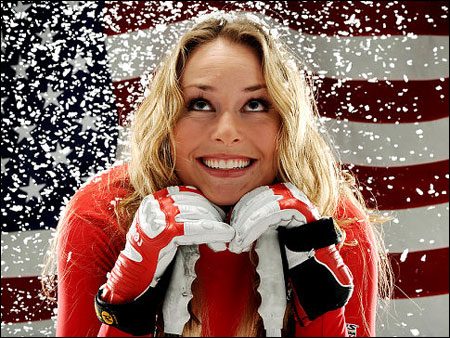
U.S. alpine skier Lindsey Vonn. I was amazed that despite her reportedly excruciating injury on her shin, she still competed and went on to win gold in the downhill on Wednesday. She was first in the downhill on Thursday’s super-combined, but unfortunately crashed during the slalom portion. We’ll still get to see how she does in the Super G, but I’m already so happy for her! She was so set on taking home the gold, and she was able to achieve it.
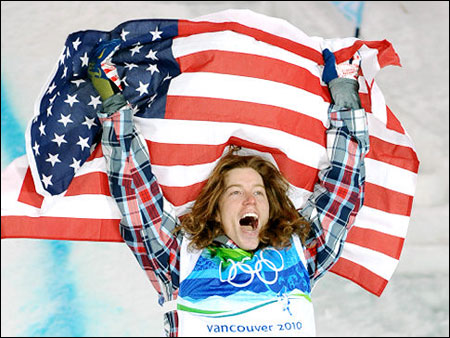
American snowboarder and skateboarder Shaun White won the gold in men’s half-pipe. His victory was already clear before his final run, and he topped off his winning lap with a Double McTwist 1260 and two flips with three spins. The confidence he exudes, his flawless execution and his unbelievable jumps and flips are what earned him the gold. Only 23 years old, he’s already done so much for the sport of snowboarding. There’s no doubt he’s one of the biggest shining stars this Olympics.
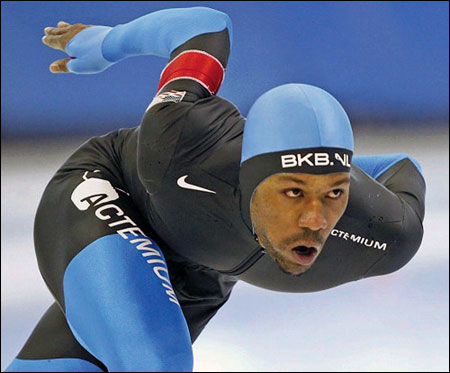
Shani Davis, American speed skater, won the 1,000-meter men’s speed skating event and as his blade crossed the finish line, he became the first man to win two consecutive gold medals in the event. Winning the gold once is accomplishment enough, but to win two back-to-back is an awesome feat!
Apolo Anton Ohno. Does he even need an introduction? A short track speed skater for the U.S. and a six-time medalist in the Winter Olympics, he’s been the reigning US champion since 2001 after winning the men’s national title twelve times! He’s currently tied with Bonnie Blair for most medals won by an American at the Winter Games, and this year, he has his sights set on adding another medal to his name to break that record.
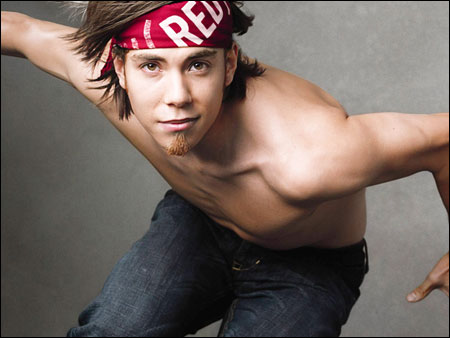
Onto my favorite sport of the Olympics — figure skating! I was very excited to watch American figure skater Evan Lysachek win the gold last night as the men’s figure skating event completed its long program. He skated so well! Lysachek is the first American male figure skater to win the gold since Brian Boitano did in 1988.
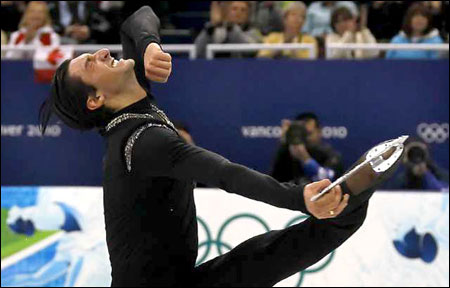
I personally was rooting for Japanese figure skater Daisuke Takahashi — probably Japan’s favorite in male figure skating this Olympics, he was definitely up there as a potential gold medalist. Due to a slip during his long program, he let that chance slip away but still was able to garner the bronze medal and make history, becoming the first male Japanese medalist in the event.
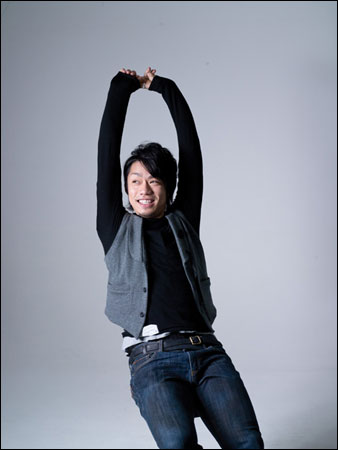
One of Japan’s other medal contenders for men’s figure skating, Takahiko Kozuka. Only 20 years old, he placed 8th last night and still has a ways to go before being able to win a medal at the Winter Games, but he’s definitely got the potential. Watching him skate last night, I noticed that he has a true grace and fluidity to his movements on the ice. The other skaters have a strong, powerful presence while skating but he seems to weightlessly glide. He’s definitely one to watch in the years to come.

And the ladies! I can’t wait until Tuesday, when the women’s figure skating programs kick off. I respect and love watching all the ladies in this category, so I will probably be happy with whoever wins, but among my top personal favorite is Mao Asada, currently ranked 3rd in the world by the ISU. Whether she will win the gold this Olympics is uncertain, but I have loved her since I first noticed her on the figure skating scene. She is just so adorable! Asada nailed her triple axle at age 12, and has passion and drive, as well as accuracy and grace. I hope that she will at least go home with a medal. 🙂

Japan’s Miki Ando is my other personal favorite, and she has also shown a lot of promise this season. The first and only female skater to successfully complete a quadruple jump in competition, she is still ranked 7th in the world by the ISU. I’m interested in whether she or Asada will perform better during the Winter Games this year. It would be very exciting if she can follow in Shizuka Arakawa’s footsteps and win a gold for Japan again.

The third female figure skater from the Japanese Olympic team is Akiko Suzuki. I actually have not followed her as closely as Asada and Ando, so I haven’t really formed an opinion yet about her, but she completes the trio of ladies that are headlining Japan’s female figure skating this year. I’m curious to see how she will perform.

Korea’s Yuna Kim is a formidable contender for the gold this year, and it looks like she is the favorite for ladies figure skating this Olympics, with a lot of people predicting that she will be the one to come out on top this year. She’s the reigning world champion and is currently ranked #1 in the world by the ISU. I love watching her skate — she rarely ever slips on the ice and her performances are near flawless, doing it all with that pretty smile. The predictions that she will take home the gold this year may come true, but it won’t necessarily be easy, looking at the other contenders in the mix.

I was surprised that 16-year old Mirai Nagasu made it onto the U.S. team this time around. She’s still pretty young and probably has some years to go before she will be able to boast an Olympic medal, but she’s definitely an up and coming star. She is a Japanese American from Southern California. (So many talented Japanese and Japanese American figure skating ladies these days!)

For the pairs figure skating that ended earlier this week, I couldn’t be happier for China’s Shen Xue and Zhao Hongbo winning the gold! During their eighteen years of skating together, the married couple had won numerous medals and titles, winning two bronze medals in past Olympics, but the gold had always evaded them. They went into retirement in 2007, but came out of retirement this Olympics in hopes that they could try for gold once again. And they succeeded! They made history by becoming the first Chinese skaters to win the gold medal in any figure skating category. What a story! I was so inspired by this pair — they are definitely some of my favorites among the athletes in Vancouver this year.

With over a week left to go in the Olympics, there are a lot more events to be held and medals to be won. The excitement of the Winter Games only comes around once every four years, so I will continue to be attached to the sofa for the next nine days, soaking in every moment of Olympic glory.